


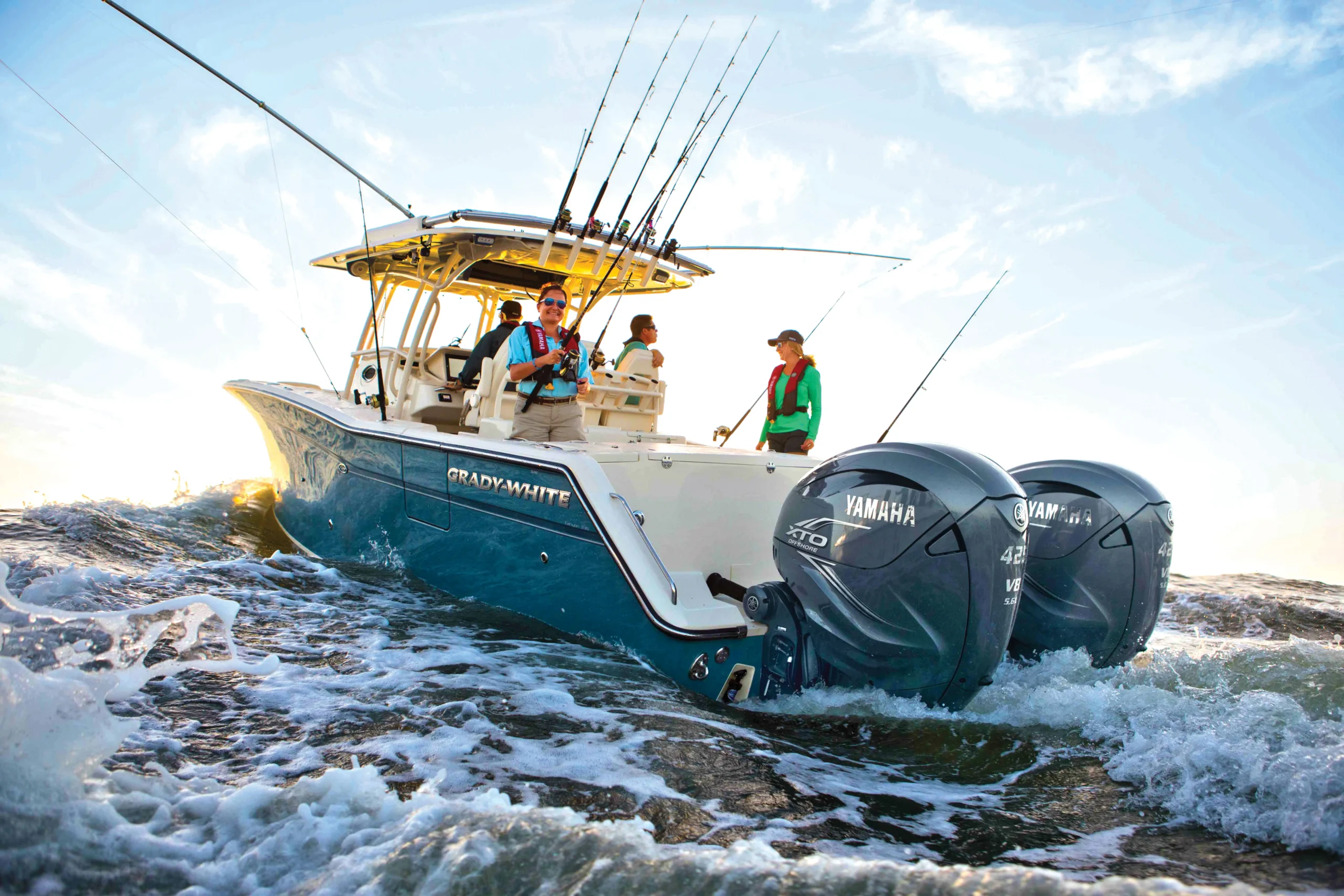
Two questions decide whether an outboard motor is right for your boat: how much power, and how long the shaft. Get either one wrong and you’ll either underpower your boat or physically damage the transom. Here’s how to get both right.
Horsepower: The Ceiling Is the Law
Every boat sold has a maximum horsepower rating on its capacity plate — and it’s not a suggestion. Exceeding it is unsafe, often illegal, and can void your insurance.
Within the legal maximum, more horsepower means better acceleration, easier planing with a full load, and safer handling in rough water. Less horsepower means better fuel economy and lighter weight. The right answer depends on how you actually use the boat:
— Small dinghies, tenders, and sailboat auxiliaries (2.5–15 HP): portability matters most. These motors are light enough to carry one-handed and sip fuel. — Runabouts, pontoons, and fishing boats (20–115 HP): the workhorse range. Enough power to pull skiers and tubes, efficient enough for long days trolling. — Offshore and performance boats (150–300+ HP): planning speeds in seconds, confident handling in chop, and the torque to push heavy hulls.
A common mistake: buying at the bottom of the range to save money, then discovering the boat won’t plane with passengers and gear. If you’re between two sizes, size up — you’ll rarely regret it.
Shaft Length: The Measurement That Matters
The shaft must match your transom height. Measure from the transom mounting surface straight down to the bottom of the hull:
— Short shaft (15″): flat-bottom boats, small dinghies — Long shaft (20″): the most common — most runabouts and fishing boats — Extra-long shaft (25″): sailboats, deep-V hulls, kicker positions on larger boats
Too short, and the propeller cavitates in turns and rough water — you’ll lose thrust exactly when you need it. Too long, and the lower unit sits too deep, creating drag, spray, and stress on the transom.
Two-Stroke or Four-Stroke?
Modern four-strokes dominate today’s market: quieter, cleaner, more fuel-efficient. Two-strokes are lighter for the same power and simpler to maintain — which is why they persist in some commercial and racing applications. For almost every recreational buyer, a modern fuel-injected four-stroke is the right answer.
New or Used?
New means warranty, known history, and the latest efficiency. Used means real savings — if the unit is verified. Compression test, leak-down test, and an honest seller are non-negotiable.
Still Unsure?
Tell us your boat’s make, length, and weight — we’ll recommend the right motor and shaft length in one reply. Getting it right before you buy is always cheaper than getting it wrong after.