


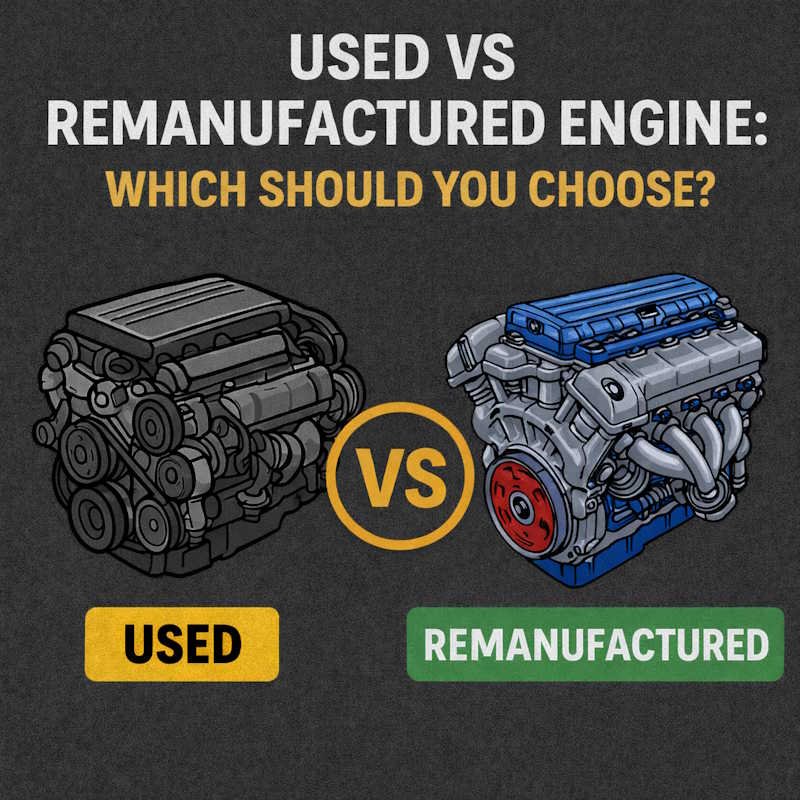
Buying a replacement engine means making one big decision before anything else: new, remanufactured, or used? Each option has a real place — the right choice depends on your vehicle, your budget, and how long you plan to keep it. Here’s an honest breakdown.
The Crate Engine: Zero Compromises
A crate engine is brand new, straight from the manufacturer, with zero hours on it. Nothing is worn, nothing is unknown.
The advantages are obvious: full manufacturer’s warranty, no history to worry about, and often updated components that fix known flaws of the original design. For restorations, performance builds, or vehicles you plan to keep for many years, a crate engine is the cleanest answer.
The disadvantage is equally obvious: price. A crate engine is the most expensive option — sometimes two to three times the cost of a used unit. If your vehicle’s market value is modest, the math can be hard to justify.
The Remanufactured Engine: The Smart Middle Ground
A remanufactured engine has been completely disassembled, cleaned, inspected, and rebuilt to factory specification. Worn components — bearings, rings, gaskets, seals — are replaced with new parts. The block and heads are machined back to tolerance.
What separates a remanufactured engine from a “rebuilt” one is the process: remanufacturing follows documented specifications, not the judgement of whoever happened to do the work. Done properly, a remanufactured engine performs like new at roughly half the price — and usually carries a meaningful warranty.
This is the option we recommend most often for daily drivers: modern reliability without the crate-engine price tag.
The Used Engine: The Honest Gamble (When Done Right)
A used engine is a low-mileage unit removed from a running vehicle. It’s the cheapest option — sometimes remarkably cheap.
The risk is history. A used engine can be a gem or a time bomb, and the difference lies entirely in how it was tested and verified. This is why we compression test every cylinder, leak-down test, inspect the oil for contamination, and run the engine before listing it. We publish the actual compression numbers — not “tested OK” — because numbers don’t lie.
Choose a used engine when the budget is tight, when the vehicle itself has limited life left, or when you trust the seller’s verification process completely. If a seller can’t show you compression readings, walk away.
The Quick Comparison
Crate: highest cost, zero risk, best for keepers and builds Remanufactured: mid cost, near-new reliability, best for daily drivers Used: lowest cost, real risk without verification, best for tight budgets
Our Advice
There’s no universal right answer — but there is a wrong one: buying on price alone. An engine is the heart of your vehicle. Whatever option you choose, make sure it’s tested, documented, and warrantied. And if you’re not sure which fits your situation, send us your VIN and a description of your plans. We’ll tell you honestly — even if the honest answer costs us a sale.